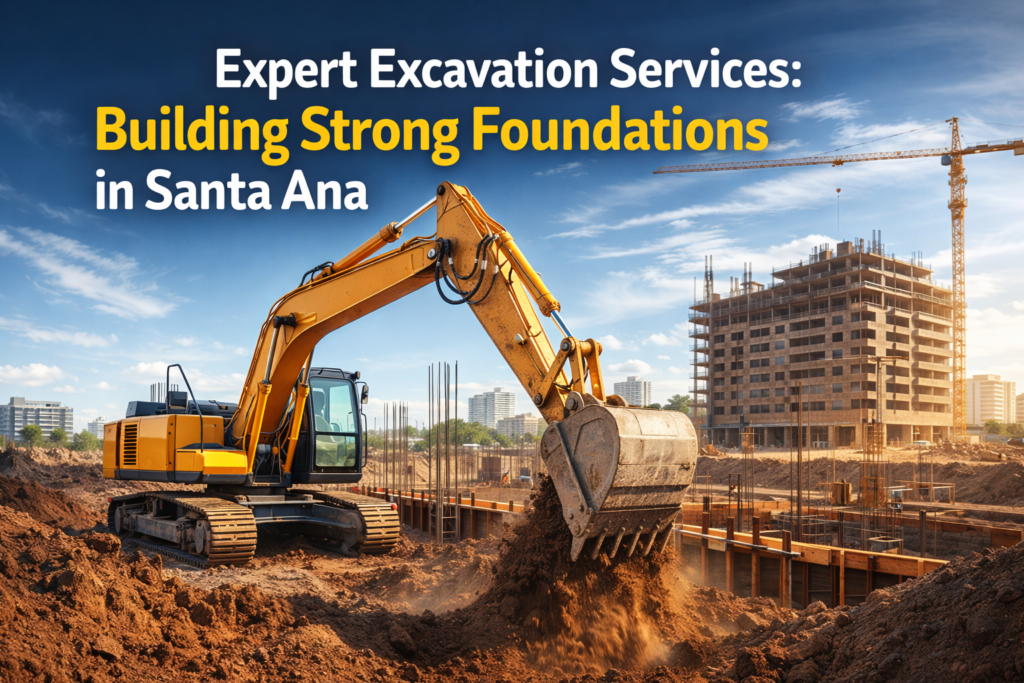
Every successful construction project in Santa Ana begins beneath the surface. Before the first brick is laid, pavement is poured, or foundation is formed, precise excavation work establishes the stable platform upon which everything else depends. From residential additions requiring foundation trenches to commercial developments needing complete site grading, excavation represents the critical first step that determines whether projects succeed or struggle with ongoing problems stemming from inadequate groundwork.
Santa Ana’s diverse geography—from the flatlands near the Santa Ana River to gradually sloping terrain toward the foothills—creates varied excavation challenges requiring expertise, proper equipment, and thorough understanding of local soil conditions. Whether you’re planning a home improvement project, developing commercial property, or addressing drainage issues, professional excavation services provide the precision and reliability that amateur approaches simply cannot match. Understanding what quality excavation entails helps property owners make informed decisions protecting their investments from the ground up.
The Foundation of All Construction Projects
Excavation encompasses far more than simply removing dirt. Professional site work involves precise earth moving to exact elevations, creating stable platforms for construction, establishing proper drainage gradients, and managing subsurface conditions affecting project feasibility and cost. These complex tasks require reading and interpreting engineering plans, understanding soil mechanics, and operating sophisticated equipment with precision measured in fractions of inches across distances spanning hundreds of feet.
Modern excavation relies heavily on technology that didn’t exist a generation ago. GPS-guided equipment allows operators to cut grades to exact specifications without constant surveying, dramatically improving accuracy while reducing labor costs. Laser systems provide real-time feedback showing operators precisely where they are relative to design elevations. Ground-penetrating radar identifies underground utilities, voids, and buried objects before equipment contacts them, preventing costly strikes and project delays.
Site preparation establishes the canvas upon which construction occurs. This process involves clearing vegetation, removing topsoil for later reuse in landscaping, and excavating to depths specified in engineering plans. Proper site preparation addresses drainage patterns directing water away from structures, identifies and mitigates poor soil conditions requiring special treatment, and creates access routes allowing subsequent construction phases to proceed efficiently.
Grading work shapes sites to design specifications, creating level building pads, sloped parking areas, drainage swales, and retention basins. Precision grading prevents the water intrusion, settling, and erosion problems that plague projects where this foundational work is executed carelessly. The difference between adequate and excellent grading often doesn’t appear until years later when properly graded sites remain stable while poorly prepared properties experience ongoing drainage, foundation, and pavement problems.
Comprehensive Excavation Services for Santa Ana Properties
Foundation excavation creates precise trenches or basins for building footings, basement construction, or equipment installations. These excavations must achieve exact depths ensuring foundations bear on competent soil capable of supporting structural loads. Width specifications accommodate formwork, reinforcement placement, and worker access during concrete placement. Professional excavators understand these requirements, creating excavations that facilitate efficient foundation construction while maintaining safety throughout the process.
Utility trenching installs the infrastructure making modern life possible—water lines, sewer laterals, gas services, electric cables, and telecommunications conduits. Each utility type follows specific depth requirements, separation distances from other utilities, and bedding specifications protecting pipes and cables from damage. Excavating these trenches requires avoiding existing utilities, maintaining proper slopes for gravity-driven systems, and preparing stable trench walls preventing collapse during installation.
Site development for commercial and residential projects involves transforming raw land into buildable lots. This comprehensive work includes mass grading establishing overall site elevations, creating building pads, installing drainage infrastructure, and constructing access roads. Large-scale earthwork requires moving thousands of cubic yards efficiently while maintaining precise elevation control across entire project sites. Professional contractors coordinate equipment fleets, manage material logistics, and sequence operations maximizing productivity.
Demolition and removal services clear existing structures, pavement, or site improvements preparing properties for redevelopment. Modern demolition emphasizes selective removal preserving reusable materials, protecting adjacent structures from damage, and managing hazardous materials like asbestos appropriately. Excavators load demolished materials for recycling or disposal, leaving sites ready for new construction without debris or obstacles impeding subsequent work.
Understanding Santa Ana’s Unique Excavation Challenges
Santa Ana’s position within the Santa Ana River watershed creates specific considerations for excavation and grading work. Areas near the river may encounter high groundwater tables requiring dewatering during construction. Seasonal variations in groundwater levels affect excavation timing and methodology. An experienced Excavating Contractor Santa Ana understands these hydrological patterns, planning projects around water table fluctuations and implementing appropriate dewatering systems when necessary.
Soil conditions vary throughout the city affecting excavation difficulty and foundation requirements. Some areas contain dense clay soils providing excellent bearing capacity but proving difficult to excavate and grade. Other locations feature sandy soils excavating easily but requiring deeper foundations or soil stabilization for adequate support. Former agricultural areas may contain organic soils unsuitable for supporting structures without removal and replacement. Professional excavators recognize these soil variations, adjusting approaches to match site-specific conditions.
Urban excavation presents challenges that rural or greenfield sites don’t encounter. Working within established neighborhoods means protecting adjacent properties from vibration, managing dust and noise, and coordinating with utility companies to avoid service disruptions. Limited access requires smaller equipment and careful logistics planning. Parking restrictions and traffic patterns affect equipment delivery and material hauling. Local contractors familiar with Santa Ana’s neighborhoods navigate these complications efficiently.
Environmental regulations governing excavation have expanded significantly in recent years. Stormwater management requirements mandate erosion control measures preventing sediment discharge from construction sites. Air quality regulations limit dust generation during earthwork. Archaeological sensitivity in certain areas requires monitoring during excavation. Professional contractors understand these regulatory requirements, implementing compliant practices that prevent project shutdowns and penalties while protecting environmental resources.
Safety Standards That Cannot Be Compromised
Excavation ranks among construction’s most dangerous activities. Trench collapses bury workers with often-fatal results. Cave-ins occur suddenly even in apparently stable soil when conditions change or depths exceed safe limits. These hazards make comprehensive safety programs absolutely essential for professional excavation operations, not optional enhancements improving already-adequate practices.
OSHA regulations mandate protective systems for excavations five feet deep or greater unless dug entirely in stable rock. Protection options include sloping excavation walls to safe angles eliminating collapse potential, installing trench boxes or shields protecting workers from cave-ins, or using shoring systems with adjustable supports. Soil classification determines which protective methods suffice, requiring competent person evaluation daily before workers enter excavations.
Underground utility strikes create immediate dangers beyond simple service disruptions. Natural gas line strikes can cause explosions and fires. Electric cable strikes electrocute workers or ignite equipment. High-pressure water main breaks flood excavations creating drowning hazards. Even striking telecommunications cables generates significant liability and repair costs. Professional excavation practices emphasizing thorough utility location and careful exposure techniques minimize these life-threatening hazards.
Equipment operation safety protects both operators and ground personnel working near heavy machinery. Blind spots around excavators and loaders create situations where operators cannot see nearby workers. Swing radius hazards exist wherever excavators operate in confined areas. Proper communication protocols, designated spotters, and restricted access zones prevent the crushing injuries and fatalities that occur when safety procedures are ignored or inadequately implemented.
Equipment Selection and Operational Expertise
Excavator selection depends on project scale, site access, and work type. Compact excavators weighing 5-10 tons access tight residential spaces while providing adequate capacity for foundation work and utility installation. Mid-size machines in the 15-30 ton range balance productivity with maneuverability for commercial projects. Large excavators exceeding 40 tons move earth efficiently on major developments where production rates determine project economics. Professional contractors maintain diverse equipment fleets, deploying appropriately sized machines for each project’s specific requirements.
Specialized attachments expand equipment versatility across varying site conditions. Standard buckets handle general excavation in most soils. Hydraulic breakers fracture rock or concrete requiring removal. Grading buckets create precise slopes for drainage work. Augers drill holes for foundations or utility poles. Compaction wheels or plates densify backfill materials. This attachment variety allows contractors to adapt equipment capabilities matching site-specific challenges rather than forcing all situations into one-size-fits-all approaches.
Bulldozers provide mass grading capabilities that excavators cannot match. These tracked machines push large soil volumes efficiently across building sites, creating rough grades before final shaping. Their low ground pressure allows operation on soft soils where wheeled equipment would sink. Blade control systems using GPS or laser guidance enable precision grading meeting specifications without constant surveying. Major site development projects typically employ both excavators and bulldozers, using each machine type for work it performs most efficiently.
Hauling equipment removes excess excavated material or imports fill meeting project specifications. Articulated dump trucks navigate rough terrain and soft conditions that would strand highway dump trucks. Their shorter length and better maneuverability suit confined site conditions common in urban environments. Water trucks control dust during dry weather, meeting air quality requirements while improving site conditions. Professional contractors coordinate hauling logistics ensuring continuous excavation productivity without delays waiting for trucks or creating congestion from too many haulers arriving simultaneously.
Soil Management and Material Handling
Every cubic yard of excavation generates material requiring appropriate management. Topsoil gets stripped and stockpiled separately for later reuse in landscaping, preserving this valuable resource rather than burying it beneath structures or hauling it away. Unsuitable soils requiring removal get loaded directly into trucks for disposal at approved facilities. Usable excavated material may be stockpiled for later use as backfill or spread across site areas requiring fill.
Cut-and-fill balance represents a key consideration in site planning and grading design. Projects balanced to minimize import or export of materials reduce costs substantially while supporting sustainability through reduced truck traffic and fuel consumption. However, achieving balance requires careful planning and execution—excess cut material needs placement areas while fill requirements need material sources. Professional excavators work closely with civil engineers optimizing grading plans for economic material management.
Compaction testing verifies fill placement meets engineering specifications. Standard Proctor or modified Proctor tests establish maximum achievable density for specific soil types. Field density tests using nuclear gauges or other methods verify that placed fill achieves specified percentages of maximum density—typically 90-95% depending on application. This testing protects owners by documenting that foundations, pavement base courses, and utility bedding provide the support that designs assume.
Moisture content significantly affects soil handling and compaction characteristics. Soils too dry don’t compact adequately no matter how much rolling they receive. Overly wet soils become unstable, unable to support construction equipment or achieve specified densities. Professional excavators monitor moisture conditions, adding water when needed or allowing drying time when soils are too wet. This attention to detail ensures efficient operations producing compliant results rather than wasting effort attempting impossible compaction of improperly conditioned soils.
Drainage Solutions and Water Management
Surface drainage design prevents water accumulation that damages structures, creates safety hazards, and breeds mosquitoes. Proper grading creates positive drainage directing water away from buildings toward collection points like streets, storm drains, or drainage channels. Minimum slopes typically require one to two percent gradient—seemingly subtle but absolutely critical for reliable water movement. Professional grading establishes these slopes precisely, preventing the standing water problems that plague sites where drainage receives inadequate attention.
Subsurface drainage systems address groundwater and soil moisture that surface grading cannot manage. French drains, foundation drains, and curtain drains intercept groundwater before it reaches structures, directing it to appropriate discharge points. These systems require proper sizing, adequate slope, and appropriate filter fabric preventing soil infiltration that clogs drain pipes. Installation demands precision—drains installed too shallow or at inadequate slopes fail to perform regardless of proper component selection.
Retention and detention basins manage stormwater runoff, reducing peak flows and removing pollutants before water enters municipal systems or natural waterways. These engineered features require precise excavation creating specific volumes at designated elevations. Outlet structures control discharge rates while inlet protections prevent erosion. Professional excavators construct these facilities exactly to specifications, ensuring they perform hydraulically as designed while meeting increasingly stringent regulatory requirements.
Erosion control protects sites during construction and after final grading until vegetation establishes. Silt fences along site perimeters capture sediment before it leaves properties. Erosion control blankets stabilize slopes too steep for reliable vegetation establishment. Hydroseeding applies seed, mulch, and stabilizers in single operations, quickly establishing ground cover preventing erosion. These measures comply with NPDES permit requirements while demonstrating environmental responsibility that benefits communities and protects water quality.
Permitting and Regulatory Compliance
Grading permits regulate excavation and earthwork throughout Santa Ana. These permits require engineered plans showing existing and proposed grades, drainage patterns, erosion control measures, and soil compaction specifications. Plan review ensures projects comply with building codes, zoning requirements, and environmental regulations. Inspections at various construction stages verify work matches approved plans. Professional contractors manage permitting processes efficiently, submitting complete applications that move through approval without delays from deficiencies or missing information.
Environmental compliance extends beyond simple grading permits. Projects disturbing more than one acre trigger NPDES permit requirements for stormwater pollution prevention. Cultural resource sensitivity requires archaeological monitoring during excavation in designated areas. Endangered species habitat protections may restrict work timing or methods in certain locations. Navigating these overlapping regulations requires expertise that established local contractors develop through years managing diverse projects under evolving regulatory frameworks.
Utility coordination prevents the service disruptions and safety hazards that utility strikes create. California law requires calling Underground Service Alert before excavating, triggering utility companies to mark their infrastructure locations. However, these marks show approximate positions—professional excavators use additional detection methods and hand digging around marked utilities verifying exact positions before machine excavation proceeds. This diligence prevents the strikes that cause project delays, expensive repairs, and dangerous situations.
Inspections throughout excavation and grading verify compliance with approved plans and building codes. Foundation inspections occur before concrete placement, ensuring excavations achieve proper depth and bearing on competent soil. Compaction testing verifies fill placement meets specifications. Final grading inspections confirm sites match approved drainage plans. Professional contractors coordinate these inspections proactively, maintaining schedules while ensuring all work receives proper verification before subsequent construction phases cover it.
Investment Value and Project Economics
Excavation costs vary dramatically based on site conditions, project scope, access limitations, and disposal requirements. Straightforward projects in good soil conditions may cost $3-8 per cubic yard for excavation and grading. Difficult conditions like rock excavation, high groundwater, or contaminated soil removal can exceed $50 per cubic yard. Professional contractors provide detailed estimates after thorough site evaluation, preventing the surprise costs that plague projects based on assumptions rather than actual conditions.
Hidden conditions discovered during excavation affect costs and schedules unpredictably. Buried foundations, underground tanks, or unexpected rock all require addressing before work proceeds. While thorough investigation minimizes surprises, complete certainty about subsurface conditions proves impossible without excavating. Reputable contractors discuss these possibilities upfront, establishing procedures for addressing unknowns fairly when they inevitably appear rather than leaving cost responsibility ambiguous until disputes arise.
Quality excavation work provides value far exceeding simple earth-moving costs. Proper site preparation prevents the foundation settlements, drainage failures, and pavement problems that generate expenses dwarfing original excavation investments. Precision grading eliminates ongoing maintenance addressing water intrusion or erosion. These long-term benefits justify investing in experienced contractors rather than choosing based solely on lowest initial bids that often reflect inadequate planning, insufficient equipment, or inexperienced operators.
Your Santa Ana project deserves excavation work executed with the precision and expertise that creates stable foundations for decades of reliable performance.
Frequently Asked Questions
How long does typical residential excavation take? Foundation excavation for home additions typically completes in 1-3 days depending on size and access. Whole-house excavations for new construction may require 1-2 weeks including grading and utility trenching. Complex sites with rock, poor soil, or difficult access extend timelines. Contractors provide realistic schedules after evaluating specific site conditions.
What happens if rock is encountered during excavation? Rock excavation requires hydraulic breakers, specialized rock teeth, or drilling and blasting depending on rock type and volume. These methods add costs and time compared to soil excavation. Professional contractors discuss rock possibilities during initial site evaluation, establishing procedures and pricing for this contingency before work begins.
Do I need permits for excavation on my property? Most excavation projects require grading permits from Santa Ana’s Building Division. Foundation work needs building permits. Utility connections require separate permits from respective utility companies. Professional excavators manage permitting as part of comprehensive service, ensuring all required approvals are obtained before work starts.
How is excavated soil disposed of? Usable soil may be spread on-site in designated fill areas or stockpiled for later use. Excess soil gets hauled to approved disposal facilities or sold for use on other projects requiring fill. Contaminated soil requires special handling and disposal at facilities licensed for specific contaminant types. Disposal costs are typically included in excavation estimates.
Can excavation occur during rainy weather? Heavy rain prevents excavation as equipment cannot operate safely on saturated soil and erosion control becomes impossible. Light rain may allow work to continue with proper precautions. Winter projects in Southern California typically account for weather delays. Professional contractors monitor forecasts, scheduling work to maximize productivity while maintaining safety and quality standards.