The puppy checklists you find pinned to the fridge of every expecting dog family cover the obvious: crate, food, collar, chew toys, vet appointment. What they almost never cover is the part that dominates your actual first month — the sheer, relentless logistics of mess. A young puppy eliminates up to a dozen times a day, misses the mark constantly while house training, and turns your yard into a minefield faster than seems biologically possible. This is the other checklist: the cleanup kit and the habits that experienced owners wish someone had handed them before day one.
The First-Month Reality, By the Numbers
An eight-week-old puppy has a bladder the size of a walnut and roughly zero impulse control. Expect a potty trip every one to two hours while awake, within fifteen minutes of every meal, immediately after every nap, and mid-zoomies without warning. That is ten to twelve outdoor trips daily, plus the indoor accidents that are a normal part of learning, not a failure of your puppy or your training. Owners who accept this math on day one stay patient; owners who expected three tidy trips a day burn out by Thursday.
The Indoor Cleanup Kit
- Enzymatic cleaner, and lots of it. Regular household cleaners remove the stain but leave the odor signature that tells a puppy “this is the bathroom.” Enzyme formulas digest the residue completely. Buy the large bottle; the small one is gone by week two.
- A roll of paper towels in every room the puppy can access. Speed matters — accidents cleaned within a minute do not soak into padding.
- A blacklight flashlight. Sounds absurd, works brilliantly: it reveals dried urine spots you missed, which explains why the puppy keeps returning to one corner.
- Washable rugs and a rolled-up plan for the good carpet. Veterans simply store the expensive rugs for three months. It is not surrender; it is strategy.
The Outdoor Cleanup Kit
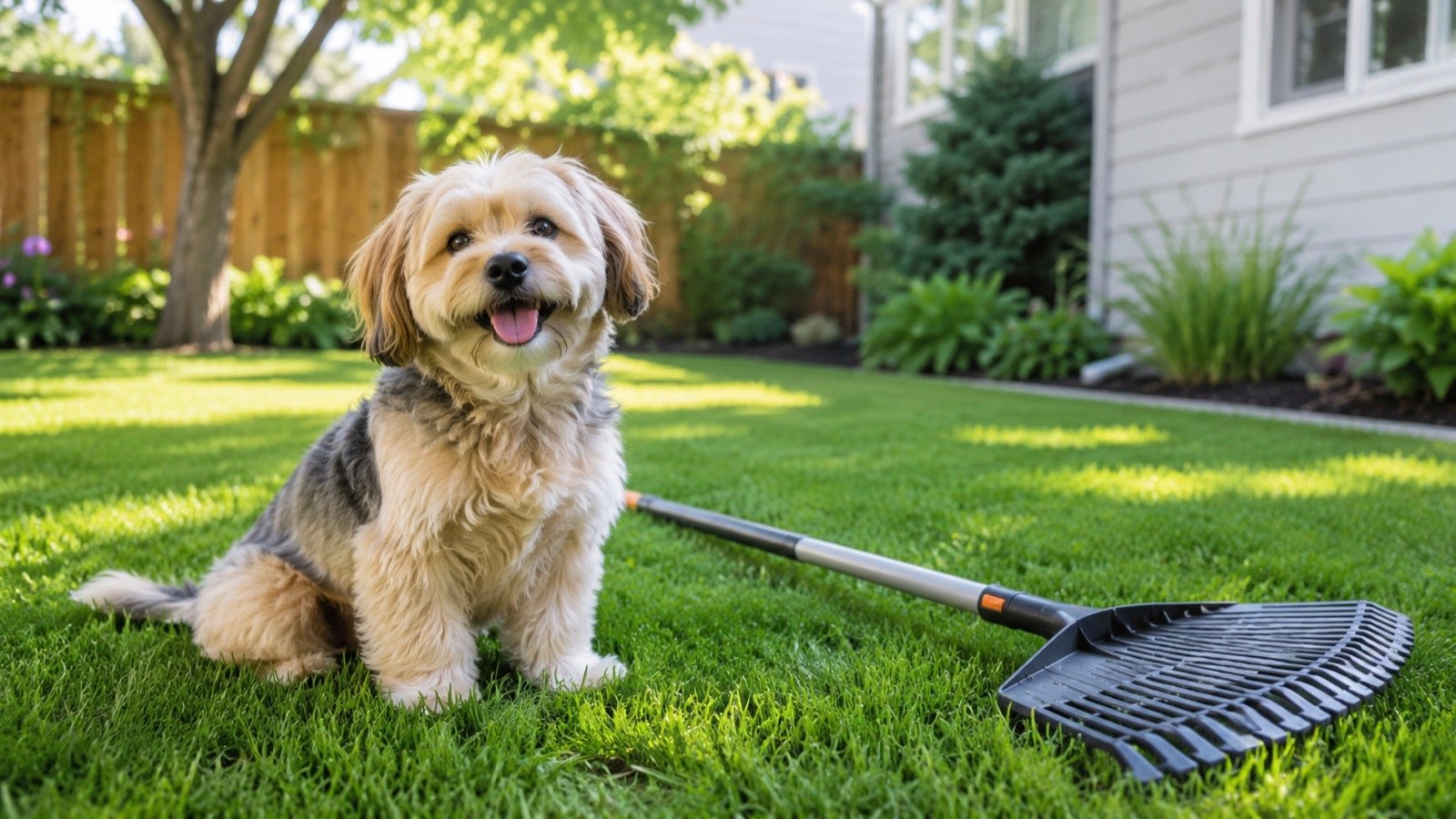
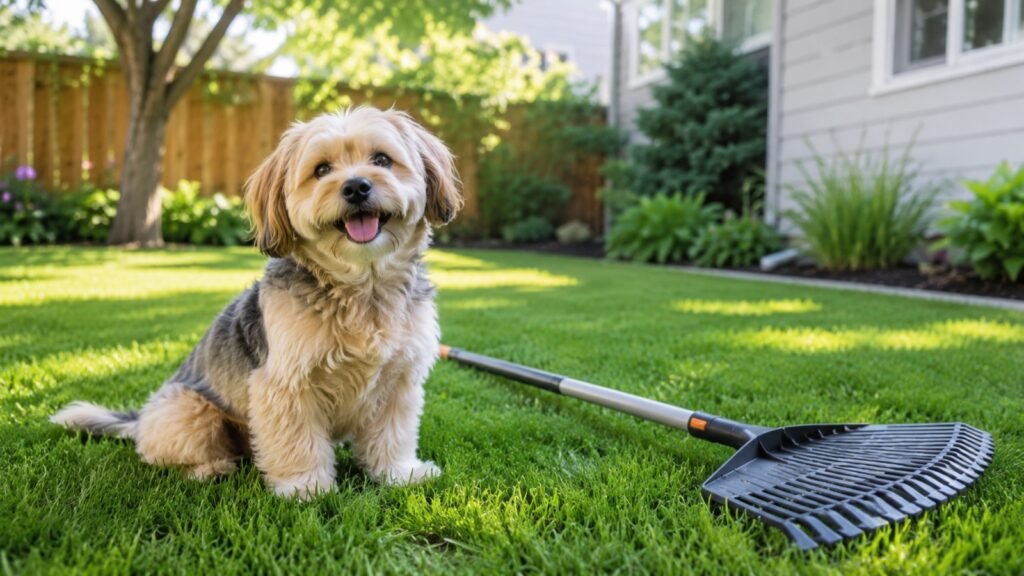
Here is where new owners consistently under-buy. Puppy waste is soft, frequent, and scattered, and picking it up with a thin sandwich-grade bag is a sensory experience nobody repeats voluntarily. Stock thick bags from the start — the kind built like Heavy duty trash bags in miniature — so no pickup ever ends in a tear-through. Add a long-handled scooping tool so the twelfth pickup of the day happens standing upright; owners debate between a bag-grip stick design and the classic Pooper Scooper metal rake styles, but the real non-negotiable is that whichever you choose lives by the back door, not in the garage. Finish the station with a small lidded pail lined and emptied every other day, because a month of puppy output in the main bin teaches you about odor compounding in ways you cannot unlearn.
Habit One: The Same Door, The Same Spot
House training accelerates dramatically when every trip exits the same door to the same patch of yard. The consistent route builds the association faster than any verbal cue, and the designated spot concentrates the mess into one small zone you can clear in a minute instead of patrolling the whole property. Pick a spot with easy footing near the door — at 2 a.m. in the rain, you will thank yourself — and reward calmly the instant business concludes, not after you are back inside.
Habit Two: Log the First Two Weeks
It feels excessive, but a simple notes-app log of meals, naps, and eliminations reveals your specific puppy’s rhythm within days. Most owners discover a predictable pattern — say, elimination reliably twenty minutes after eating — and once you can predict, you can prevent. The log also becomes gold at the first vet visit, because “loose stool three times since Tuesday, always after the training treats” is diagnosable, while “sometimes his stomach seems off” is not.
Habit Three: Supervised Freedom, Expanding Slowly
The cleanup burden shrinks in direct proportion to supervision. A puppy with the run of the house will have accidents you find hours later; a puppy in the same room as you, gated or tethered nearby, gets caught mid-squat and redirected outside, which is the actual mechanism of house training. Expand territory one room at a time, earned by a week without accidents in the current zone. Slow is fast here — the families who rush to full house freedom in week three are the ones still cleaning carpets in month six.
What Waste Tells You in Month One
New owners clean up so often that they are, without realizing it, running a daily health screen. Use it. Consistent, formed stool means the diet is working. Sudden looseness usually traces to the food transition happening too fast, too many novel treats, or the classic culprit: something scavenged from the yard. Anything persisting past a day or two, or accompanied by lethargy, is a same-week vet call — parasites are extremely common in young puppies and are confirmed by exactly the samples you have been scooping. Choosing that vet deserves the same diligence as any important hire; ask local owners which quality service providers they actually trust with their own animals, not just who is closest.
The Night Shift: Surviving 2 A.M. Potty Runs
Nobody romanticizes this part, so here is the honest playbook. Young puppies genuinely cannot hold it through the night for the first several weeks — the rough rule is one hour of bladder capacity per month of age, plus one. Set an alarm rather than waiting for whimpering, because a puppy that learns crying opens the crate has learned the wrong lesson. Keep the night run boring on purpose: dim lights, minimal talking, straight to the spot, quiet praise, back to the crate. Stage a “night station” by the door before bed — slip-on shoes, a jacket, a flashlight, and a bag — so the round trip takes four minutes instead of fifteen. The alarm moves later each week, and most puppies sleep a full seven hours by twelve to fourteen weeks. It ends sooner than it feels like it will.
The Month-One Milestones
By the end of week four, a typical household hits a recognizable rhythm: accidents down to a rare event, the yard spot doing its concentrating job, the cleanup station running on autopilot, and the puppy beginning to signal at the door. None of it came from a magic product. It came from stocking the right kit before you needed it and repeating three unglamorous habits until they became furniture. The chewed slipper phase, unfortunately, is a separate article — but you will face it with a clean floor.