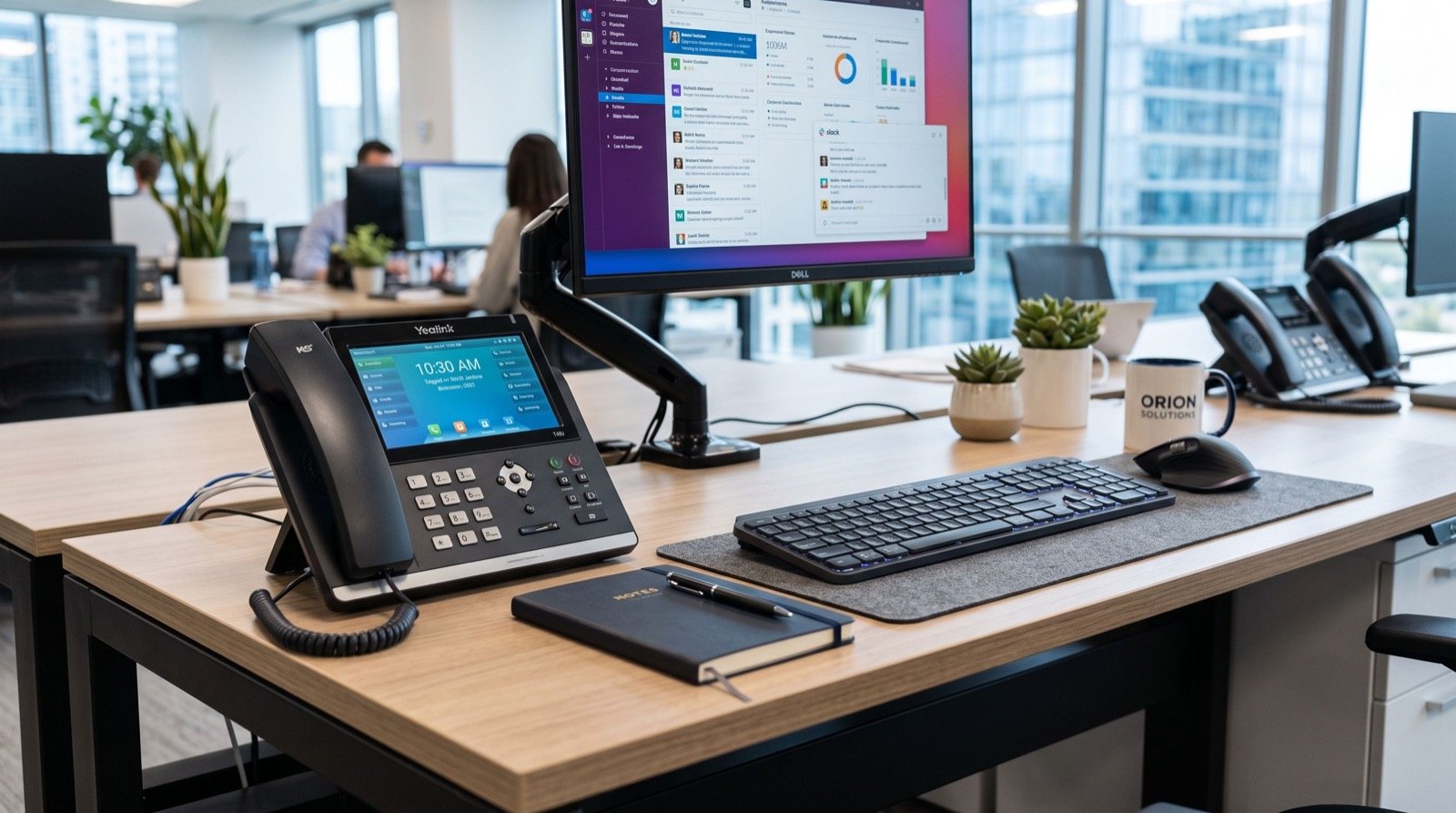
Not every business needs a wall of blinking multi-line consoles. A small design studio, a two-room clinic, or a startup renting a shared workspace often needs something far simpler: a handful of reliable phones, clear audio, and the freedom to move a desk without calling a technician. The good news is that modern IP telephony scales down beautifully. You do not have to be a large enterprise to benefit from the same voice-over-internet technology that call centers rely on.
This article is written for the smaller operation weighing its first move away from a basic landline or a jumble of personal mobiles. It focuses on getting the essentials right without overbuying, and on the practical decisions, wired or wireless, entry-level or premium, that shape how a compact team communicates day to day.
Small Teams Have Different Priorities
A large enterprise obsesses over redundancy, call queues, and integration with a customer database. A five-person team usually just wants calls to connect cleanly and the setup to stay out of the way. That difference matters, because advice written for big deployments often pushes small businesses toward complexity they will never use. The right approach for a compact office is to solve today’s problem well and leave room to grow, rather than building a system sized for a company you do not yet have.
Simplicity also protects your budget. Every feature you enable is a feature someone eventually has to understand and maintain. For a lean team, a clean, dependable phone that a new hire can use within minutes is worth more than a device bristling with buttons nobody touches.
Wired Desk Phones: The Dependable Default
For anyone who sits at the same desk most of the day, a wired IP handset remains the most reliable choice. It draws power over the Ethernet cable, so there is no charger to forget, and a wired connection sidesteps the congestion that sometimes plagues a busy office Wi-Fi network. Voice quality is consistent because the phone is not competing with laptops and phones for airtime.
Entry-level models have improved dramatically and now deliver crisp audio at a price that suits a tight startup budget. A device such as the Fanvil V50P Basic Level IP Phone shows how much value the affordable tier now packs in: clean HD voice, several line keys, power over Ethernet, and a display that handles caller ID and menus without fuss. For a receptionist or an office where the phone sits on a desk all day, this kind of no-drama workhorse is often all you need.
When Mobility Changes the Equation
Plenty of small operations do not live at a desk. A clinic where staff move between rooms, a warehouse manager walking the floor, a boutique where the owner drifts between counter and stockroom, all lose calls when the phone is anchored to one spot. This is where a cordless IP phone earns its place.
A wireless handset like the Fanvil W610W lets someone carry a full business extension in a pocket, roaming across the premises while staying connected to the same system as the desk phones. It rings for the same number, transfers calls the same way, and keeps the person reachable whether they are at their chair or across the building. For roles defined by movement, that freedom is not a luxury; it is the whole point.
The right mix follows the way people work. Desk-bound roles are best matched with wired phones that offer consistent quality and never need charging. Mobile roles call for cordless handsets that roam freely across the premises. Most small teams end up somewhere in between, with a modest blend of both tied to a single phone system, while occasional callers can share one handset placed in a common area to keep costs sensible. Choosing by behaviour rather than by habit is what prevents both overspending and daily annoyance.
What You Actually Need to Get Started
The list of essentials for a small VoIP setup is refreshingly short. You need a stable internet connection with enough upload bandwidth for your expected number of simultaneous calls, a service provider or SIP trunk to connect you to the outside world, the handsets themselves, and a switch that can supply power over Ethernet if you choose wired phones. For most small offices, that is genuinely the whole shopping list.
Hosted or cloud-based phone systems have made this even simpler by removing the need for an on-site server. The provider handles the heavy lifting in their data center, and your phones simply register to it over the internet. For a team without dedicated IT staff, this model removes a great deal of maintenance and lets you treat the phone system almost like any other subscription service.
Avoiding the Common Beginner Mistakes
Small teams tend to stumble in predictable ways. The first is running voice over a consumer-grade router already straining under video streaming and file uploads, which turns calls choppy at the worst moments. The second is ignoring number porting, only to discover on switch day that moving an existing business number takes time and paperwork. The third is skipping the short training session, leaving staff unsure how to transfer a call or check voicemail.
None of these are hard to avoid with a little foresight. Test your connection under real load, start the number-porting process early, and spend twenty minutes walking the team through the handful of features they will use. That modest preparation prevents almost every first-week headache.
Getting Help Without Overpaying
A small business does not need a sprawling managed-services contract, but a bit of expert guidance at the start goes a long way. Reputable service experts can size your bandwidth honestly, recommend the right mix of wired and cordless phones, and configure the devices so they arrive ready to use. The value is not in ongoing hand-holding but in getting the foundation right, so the system simply runs quietly in the background afterward.
Look for a partner willing to right-size the solution rather than upsell. A good sign is someone who talks you out of features you will not use, because that instinct usually means they are optimizing for your needs rather than their invoice.
Key Takeaways
- Small teams should solve today’s needs simply rather than build for an imaginary future scale.
- Wired phones suit desk-bound staff; cordless handsets serve roles that move around.
- The starter shopping list is short: internet, a provider, handsets, and a power-capable switch.
- Cloud-hosted systems remove the need for on-site servers and heavy maintenance.
- Test your connection, start number porting early, and train the team before you switch.
A System That Grows With You
The beauty of internet telephony for a small business is that starting modestly does not lock you in. Add a few phones as you hire, enable a feature when a real need appears, and the system stretches to fit. Begin with dependable handsets matched to how your people actually work, keep the setup clean, and lean on trustworthy guidance for the initial configuration. Do that, and your phones become one less thing to worry about, freeing you to spend your attention where a small team’s attention truly belongs: on the customers ringing in.